
Smart Methodologies to Clean Tough Grease Stains
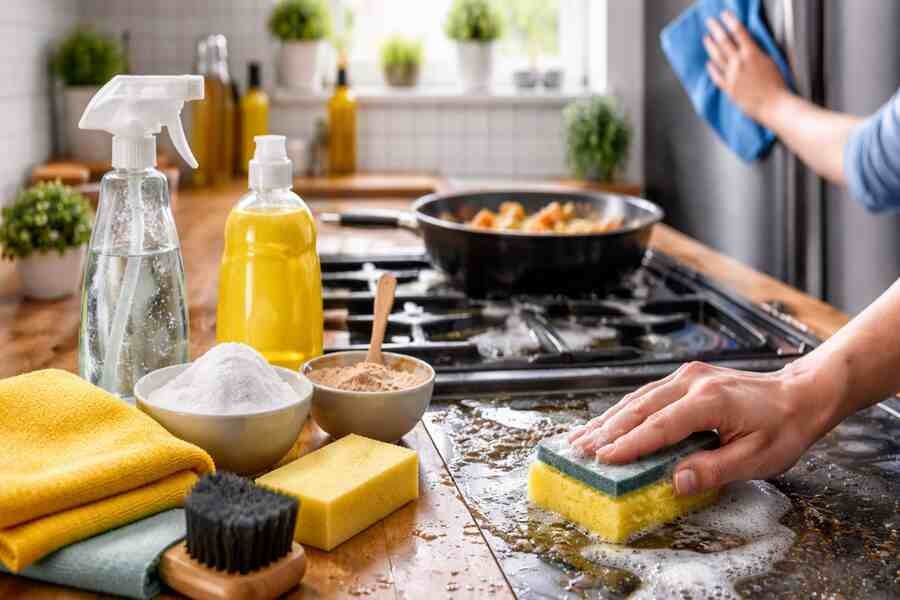
Have you never just looked at a grease stain when it is stubborn and it is like, how will I ever clean this? Grease stains, be they in the cooking process, or in a greasy hand or even in an accidental drop, present themselves as shadows and stick on the surfaces as it were. The good news? There is no need to panic and make changes. Given the proper techniques, it is safe and effective to take the grease off the surface of virtually anything.
Here, you will find out how to remove the grease stains on the kitchen counters, fabric, walls, and appliances, wood, etc, with the help of simple techniques that could be used today.
1. Kitchen Countertops
Grease is fond of kitchen tops, especially around the stove. Wipe the excess using a paper towel, as suggested by cleaning companies and professional vacate cleaning gold coast services, Add a bit of the hot water and dishwasher soap and wipe the area using a soft cloth or a sponge. Dish soap is also expected to dissolve oils, hence, it can be applied to grease. In case of difficult stains, sprinkle some baking soda, allow it for a few minutes and then wipe clean. Do not use strong abrasives on stone or marble so as to scratch and damage it.
2. Stainless Steel Appliances
The oily fingerprints and smears can create an ugly appearance to your refrigerator, oven or dishwasher. To clean the stainless steel, put in a spray bottle, mix water and white vinegar in equal measures. Spray it then apply a microfiber cloth and clean it off (but never against the grain). To hard grease, put a drop of dishwasher soap. Wash with water, then use a buff to make it shine- no smear, no haze.
3. Wooden Cabinets and Furniture
Wood is a good, greasy absorbent; thus, it requires weak cleaning. Make a mixture of warm water and diluted dish soap, moisten a cloth a little and use it to wipe the affected parts. Baking soda and water should be added to the grease in deep-set to create a paste and rub. Oil is brought up by means of baking soda, though the oil does not damage the wood. Much better to dry it out first before it gets spoiled and a good tip is to polish the wood on it to restore the shine.
4. Fabric and Clothing
Did your oil stain your shirt when cooking? Don’t worry. Wipe the grease, not with a tissue! Cornstarch or baby powder sprinkled on top of the stain and allowed to dry for 15 to 20 minutes. This absorbs excess oil. Then drop a small amount of liquid dish detergent onto the area and rub it in and run it under some warm water. Launder as usual. One should not use hot water in the beginning because it can permanently fix the stain.
5. Upholstery and Sofas
Couches that are smeared with grease are stress-inducing, yet removable. First of all, wipe more oil with the help of a clean piece of paper towel. Sprinkle and leave baking soda or corn starch on the spot for half an hour. Vacuum away the powder. Varnish wet with a cloth moistened with a mild dish soap and water. Avoid soaking the fabric. Allow it to dry up and repeat.
6. Walls and Backsplashes
Oily gravers for cooking can be attached to tiles and painted walls. Add a little warm water and dish soap, and wipe it with a soft sponge. In case of tiles, the vinegar and water solution can also be used. When painting walls, use soft ones and do not use rough scrubbers. After the grease is removed, wipe it off using clean water so that the paint is kept fresh-looking.
7. Glass and Mirrors
Greasy marks may be left behind by fingerprints as well as cooking fumes on glass. Spray water solution or glass cleaner, and spray vinegar on the surface. Wipe using a newspaper or a microfiber cloth to leave a streak-free finish. Pads used to clean should not be scrubbed because they scratch glass. It is also an excellent technique for microwave doors and oven windows.
8. Non-stick Cookware
The performance of cooking is affected by the grease that gets deposited on the pans. Wash in hot water and dish detergent, without steel wool that will destroy the non-stick coating. Where the pans contain stubborn residue it is advisable to immerse the pans in warm soapy water and leave them there at least 30-40 minutes, after which they can then be cleaned. An alkali soda and water solution is also applied to soften the dirt, though the surface remains undamaged.
9. Tile Floors and Ceramic
Greases may render floors unsafe, especially when trying to clean a cement patio or other hard outdoor surfaces exposed to oil buildup. Wipe the area with a bucket of warm water to which a few drops of dish soap are added. In case of heavy accumulation, add water to white vinegar to dilute the oil. Always wash following so as to avoid soap residues and safely restore floors to their shine.
10. Plastic Surfaces
Plastic containers and switchboards are likely to be traps to greasy fingerprints. Wash with warm water and dishwasher soap, or wash with vinegar. Wash thoroughly as plastics possess the ability of holding remains and odor. Leave to dry, do not leave spots of water.
Conclusion
Stains that are caused by grease can be tenacious but not permanent. Almost any surface can be returned to its initial pristine state using the proper and expert cleaning care and some household products such as dish soap, vinegar, baking soda and cornstarch. The trick is to do it early, use mild cleaners and select the appropriate approach to each material.
Related Posts
Nine Vital Cleaning Products Every House Needs
I entered a house and wondered why it always seemed tidy, unlike yours, which always…
Master Baseboard Cleaning with These 6 Easy Methods
Have you glanced at your baseboards, and they appear to be rougher and more dusty…

Cleaning Tips for Physical and Mental Decluttering
Best Cleaning Tips for a Healthier Home and Peaceful Mind Do you think you have…